![]() |
from Poets Online - the blog https://ift.tt/rIuElHL
urdu sad poetry, urdu poetry, sad poetry, shairi, shayari, hindi poetry, urdu poets, urdu sad shayari, shairy, sad, poetry, sad shairy, sad shairi,
![]() |
![]() |
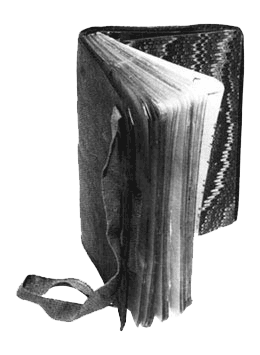
| Hopefully, your tsundoku is not this big. |
To sleep, perchance to dream," said the Bard. That is sometimes easier said than done. Is your sleep that of John Keats?
O soft embalmer of the still midnight!
Shutting with careful fingers and benign
Our gloom-pleased eyes, embower’d from the light,
Enshaded in forgetfulness divine;
O soothest Sleep! if so it please thee, close,
In midst of this thine hymn, my willing eyes,
Even when the eyes are willing, the sleep may not come.
And it would be sweet if sleep brought dreams in this cold month about spring, as in the "Winter Sleep" of Edith Matilda Thomas
I know it must be winter (though I sleep)—
I know it must be winter, for I dream
I dip my bare feet in the running stream,
And flowers are many, and the grass grows deep.
Is this month's call for submissions "sleep" or "insomnia"? I think those are two sides of the same coin. Maybe your sleep associations are more like Rita Dove's "Insomnia Etiquette"
There's a movie on, so I watch it.
The usual white people
in love, distress. The usual tears.
Good camera work, though:
sunshine waxing the freckled curves
of a pear, a clenched jaw—
more tragedy, then.
I get up for some scotch and Stilton.
I don’t turn on the lights.
I like moving through the dark
while the world sleeps on,
serene as a stealth bomber
nosing through clouds...
Or is it more like the "Insomnia" from my undergraduate poetry professor, Alicia Ostriker?
...But it's really fear you want to talk about
and cannot find the words
so you jeer at yourself
you call yourself a coward
you wake at 2 a.m. thinking failure,
fool, unable to sleep, unable to sleep
buzzing away on your mattress with two pillows
and a quilt, they call them comforters,
which implies that comfort can be bought
and paid for, to help with the fear, the failure
your two walnut chests of drawers snicker, the bookshelves mourn
the art on the walls pities you, the man himself beside you
asleep smelling like mushrooms and moss is a comfort...
I chose as our model this month, a "Sleep" poem from Rock Tree Bird by Twyla M. Hansen. I like the contrast of sleep seen from the perspectives of a child, teen and adult. I like the idea on this cold day that "the ancient ones" probably spent most of winter sleeping.
...the ancient ones
whose lives revolved around the same sun—sun worshipers—
who discovered fire, calculated the heavens, tracked stars,
who likely slept through most of this gloomy season...
What are your sleep associations? Do they come from your childhood, a baby or child's sleep, what dreams may come, or not come, along with restless sleep, nightmares, and no sleep at all?
Follow this blog for all things poetry.
To see our past prompts and more than 300 issues,
visit our website at poetsonline.org
We need to pay for the hosting and for the domain poetsonline.org and through the years the only source of income has been by having Amazon.com links to books and occasionally other items
At the end of 2023, Amazon is going to stop allowing image links (like a book cover) and many of its banner and box ads that we have used on the website and blog. Poof. They will disappear and sometimes leave behind an ugly white block in their wake on the screen. We received about a two-month notice about this and it will be quite impossible for us to fix all those links easily. It also means people are less likely to click on a link and possibly make a purchase.
Each purchase made through our links sends a few pennies (literally) into our account. There are months where that income doesn't even hit the Amazon $10 minimum so it just gets held over.
I don't know anyone who went into poetry to make money. I certainly did not, but I'd like to see Poets Online at least break even for the year.
People have suggested adding one of those Patreon or some such donation link but that feels wrong. To charge a fee to submit, as many poetry publishers do to cover costs, would require some fancy setup or using a service like Submittable (which would cost us more than we would probably take in). And I know that a fee would stop many people from submitting.
Poets Online began amongst some poet friends and grew and was always meant to be open to a wide range of poets by age and experience. We would like to keep it that way.
So, if you shopping online for books or whatever, you can help us by using our general Amazon link link (You can bookmark the short version https://bit.ly/poetsamazon) or by clicking on any of our poetry book links for our featured poets and their books and making a purchase. Anything purchased through our general link counts - buy that engagement ring there! Using the links does not affect your price.
Thanks for reading this post, and for using the site whether you only read the poems or submit your own poems for consideration. We hope to still be here at the end of 2024.
Follow this blog for all things poetry.
To see our past prompts and more than 300 issues,
visit our website at poetsonline.org
Closing out 2023 means that Poets Online has been online for 25 years. A significant number for any publication, especially one that features only poetry.
Our January issue will be the 316th prompt and issue of poems. I never referred to them as "issues" at the start back in 1998, but over the years as our audience and contributors expanded that became the label.
The site started as an e-mail exchange among four poets taking turns at suggesting a prompt and then e-mailing our poems to each other. As more poets joined the group, it became an awkward mailing process, and the website was created. The following year we created a mailing list to remind people to check the latest prompt and read the poems. That list now has hundreds of subscribers.
By 20023, a free hosting website and free domain weren't enough, so I bought the domain poetsonline.org, purchased hosting, and created a new list and email using Google.
We still try to accept the best poems that respond to the current prompt in a serious way. We have always thought of the site as a place where poets of varying ages and experiences could get published. We have plenty of people who read and don't submit and a good number of teachers and students have written us to say that they find the site useful. More than a hundred other sites link to us. If your poem is published and you use it in a book later, Poets Online should be acknowledged as its first appearance.
Although I never know how many more anniversaries we will have, I am thankful for all the poems I've read and poets I have made contact with over this quarter century.
Ken Ronkowitz
Follow this blog for all things poetry.
To see our past prompts and more than 300 issues,
visit our website at poetsonline.org
I am neither a big fan of the poet Baudelaire nor am I a fan of prose poems, but this one got my attention.
I'll admit that the opening got my interest and I wanted to know how, But I too often find prose poems to be just prose. Like flash fiction. Poetic language? Perhaps, but many novelists have poetic language but I would call the novel a epic prose poem.
I'm told that intent is key in making a prose poem a poem. That is a tough one to evaluate.
Feel free to educate me on this with a comment.
William Blake's poem "The Tyger" is his most-read poem. It consists entirely of questions about the nature of God and creation. It asks how the same God that created vulnerable beings like the lamb could also have made the fearsome tiger.
The tiger becomes a symbol for one of religion's most difficult questions: Why does God allow evil to exist?
I first read the poem in a high school class and my initial question was "Why did he spell tiger wrong?" Not the deepest of literary issues. In writing this essay, I did some digging for an answer since my teacher had no answers other than "It's what they did back then."
William Blake intentionally spelled "tiger" as "tyger" in his poem that was in his collection titled "Songs of Experience" (1794). It is thought that changing the traditional spelling of "tiger" to "tyger" not only gave the word a unique. mythical and archaic quality. It also allowed Blake to exercise creative freedom about the creature he was describing. The tyger is a literal creature but also a symbolic force.
Blake was also known for his interest in the relationship between sound and meaning in language and tyger captures the phonetic qualities of the word.
"...What immortal hand or eye,
Could frame thy fearful symmetry?
...Did he smile his work to see?
Did he who made the Lamb make thee?"
The lamb refers to Blake's poem, "The Lamb," where God is associated with a gentle and innocent lamb.
THE TYGER
Tyger Tyger, burning bright,
In the forests of the night;
What immortal hand or eye,
Could frame thy fearful symmetry?In what distant deeps or skies.
Burnt the fire of thine eyes?
On what wings dare he aspire?
What the hand, dare seize the fire?And what shoulder, & what art,
Could twist the sinews of thy heart?
And when thy heart began to beat.
What dread hand? & what dread feet?
What the hammer? what the chain,|
In what furnace was thy brain?
What the anvil? what dread grasp.
Dare its deadly terrors clasp?When the stars threw down their spears
And water'd heaven with their tears:
Did he smile his work to see?
Did he who made the Lamb make thee?Tyger Tyger burning bright,
In the forests of the night:
What immortal hand or eye,
Dare frame thy fearful symmetry?
Compare that tiger to the lamb. Blake was clearly a religious person who saw visions of angels, but to me "The Tyger" is a poem that literally questions God. Can God be credited with both the good and evil in the world? I din't think you could give him the credit for creating the "lambs" of this world without also giving him responsibility for the "tygers" of this world. That was my high school interpretation (which my teacher did not appreciate or agree with) and it remains my interpretation.
THE LAMB
Little Lamb who made thee
Dost thou know who made thee
Gave thee life & bid thee feed.
By the stream & o'er the mead;
Gave thee clothing of delight,
Softest clothing wooly bright;
Gave thee such a tender voice,
Making all the vales rejoice!
Little Lamb who made thee
Dost thou know who made thee
Little Lamb I'll tell thee,
Little Lamb I'll tell thee!He is called by thy name,
For he calls himself a Lamb:
He is meek & he is mild,
He became a little child:
I a child & thou a lamb,
We are called by his name.Little Lamb God bless thee.
Little Lamb God bless thee.
Follow this blog for all things poetry.
To see our past prompts and more than 300 issues,
visit our website at poetsonline.org
Each year, Frost would select a poem and often write an original piece for the occasion. he sent them to some friends and loved ones. Later they went out to his publisher’s friends and loved ones. If you were lucky enough to be on that list and still have them, they are collectors’ items.
They began as just his way to honor the winter season with a poem. One poem used was "Christmas Trees." (an excerpt below)
...He proved to be the city come again
To look for something it had left behind
And could not do without and keep its Christmas.
He asked if I would sell my Christmas trees;
My woods—the young fir balsams like a place
Where houses all are churches and have spires.
I hadn't thought of them as Christmas trees.
I doubt if I was tempted for a moment
To sell them off their feet to go in cars
And leave the slope behind the house all bare,
Where the sun shines now no warmer than the moon...
The last Christmas mailing contained "The Prophets Really Prophesy as Mystics, the Commentators Merely by Statistics” which went out with 16,555 copies.
The collection would feature other classic poems by Frost, including “Birches,” “A Boy’s Will,” and “The Wood-Pile”
"Christmas Trees" is no Hallmark greeting card, but it ends with this Christmas wish:
A thousand Christmas trees I didn’t know I had!
Worth three cents more to give away than sell,
As may be shown by a simple calculation.
Too bad I couldn’t lay one in a letter.
I can’t help wishing I could send you one,
In wishing you here with a Merry Christmas.
Follow this blog for all things poetry.
To see our past prompts and more than 300 issues,
visit our website at poetsonline.org
Submission Deadline: December 31, 2023 Happy New Year!
Galway Kinnell was an award-winning poet best known for poetry that connects the experiences of daily life to much larger poetic, spiritual, and cultural forces. Kinnell was born in 1927 in Providence, Rhode Island and grew up in Pawtucket. A self-described introvert as a child, he grew up reading reclusive American writers such as Edgar Allan Poe and Emily Dickinson. After two years of service in the U.S. Navy, he earned a BA in 1948 from Princeton University where he was classmates with poet W.S. Merwin. He earned an MA from the University of Rochester a year later.
Of his first books, What a Kingdom it Was (1960), Flower Herding on Mount Monadnock (1964) and Body Rags(1968) which contains the bulk of Kinnell’s most praised and anthologized poems. Selected Poems (1982), for which Kinnell won the Pulitzer Prize and was co-winner of the National Book Award in 1983, contains works from every period in the poet’s career and was released just shortly before he won a prestigious MacArthur Foundation grant. Kinnell released the retrospective collection, A New Selected Poems (2001), focusing on poetry of the 1960s and 1970s, and his Collected Poems was published in 2017.
Kinnell lived in Vermont for many years. He died in 2014 at the age of 87.
Follow this blog for all things poetry.
To see our past prompts and more than 300 issues,
visit our website at poetsonline.org
![]() |
November 28 is the birthday of poet and artist William Blake, born in London in 1757. He was four years old when he had a vision that God was at his window. A few years later, he went for a walk and saw a tree filled with angels, their wings shining. He had other visions, too: he saw the prophet Ezekiel sitting under a tree, and angels walking with farmers making hay.
While some aspects of his behavior and beliefs might be considered eccentric or even insane by conventional standards, it's better to approach the question of his mental state with some sensitivity and historical context.
During Blake's time (1757-1827), the understanding and classification of mental health were different from contemporary perspectives. There is no definitive evidence to suggest that Blake was clinically insane. However, he did experience visions and claimed to have mystical experiences, which heavily influenced his artistic and poetic creations. Blake's unique worldview and his incorporation of spiritual and visionary elements in his works are more often seen as products of his unconventional thinking and artistic genius rather than indicators of mental illness.
When Blake was 10 his parents sent him to drawing school, and at the age of 14, he was apprenticed to an engraver. After seven years, he went into business for himself, and a few years later he privately printed his first book, Poetical Sketches (1783 which was a total flop. The book wasn't even mentioned in the index of London's Monthly Review, a list of every book published that month.
Not long after that, Blake's beloved brother, Robert, died at the age of 24. Blake spent two sleepless weeks at his deathbed, and when he died, Blake claimed that he saw his brother's spirit rise through the ceiling, clapping its hands with joy. From then on, Blake had regular conversations with his dead brother.
A year later, Robert appeared to William in a vision and taught him a method called "illuminated printing," which combined text and painting into one. Now known as relief etching, it was a huge breakthrough in printing. Blake printed his own Songs of Innocence (1789), Songs of Experience (1794), The Marriage of Heaven and Hell (1790), and The Book of Los (1795).
Blake died at the age of 69. He spent the day of his death working on a series of engravings of Dante's Divine Comedy. That evening, he drew a portrait of his wife, and then told her it was his time. A friend of Blake's who was there at his deathbed wrote: "He died on Sunday night at 6 o'clock in a most glorious manner. [...] Just before he died, His Countenance became fair. His eyes Brighten'd and He burst out into Singing of the things he saw in Heaven."
At the time of his death, Blake was an obscure figure, best remembered for his engravings of other peoples' work, or maybe his one famous poem, "The Tyger." Among those who knew more about his life's work, the consensus was that Blake was insane. Songs of Innocence and of Experience, which he had engraved and painted by hand, had sold fewer than 20 copies in 30 years.
It wasn't until more than 30 years after his death that a husband-and-wife team, Alexander and Anne Gilchrist, published a two-volume biography of Blake that firmly established him as a brilliant and important artist.
Throughout his career, he continued to see visions — in addition to communing with the spirits of relatives and friends, he claimed to be visited by the spirits of many great historical figures, including Alexander the Great, Voltaire, Socrates, Milton, and Mohammed. He talked with them and drew their portraits. He was also visited by angels and once by the ghost of a flea, whose portrait he drew.
Blake wrote:
"I assert for My Self that I do not behold the outward Creation [...] 'What,' it will be Question'd, 'When the Sun rises, do you not see a round disk of fire somewhat like a Guinea?' O no, no, I see an Innumerable company of the Heavenly host."
"First the notion that man has a body distinct from his soul is to be expunged: this I shall do by printing in the infernal method by corrosives, which in Hell are salutary and medicinal, melting apparent surfaces away and displaying the infinite which was hid."
"Without minute neatness of execution, the sublime cannot exist! Grandeur of ideas is founded on the precision of ideas."
Follow this blog for all things poetry.
To see our past prompts and more than 300 issues,
visit our website at poetsonline.org

Louise Glück (pronounced ɡlɪk) died October 13, 2023, at the age of 80. She was a highly praised and awarded American poet and essayist. She won the 2020 Nobel Prize in Literature, the Pulitzer Prize, the National Humanities Medal, the National Book Award, the National Book Critics Circle Award, and the Bollingen Prize. From 2003 to 2004, she was the Poet Laureate of the United States.
Despite all those awards, I will admit to not being very familiar with her poetry. I never heard her read in person and I don't have any of her books on my shelf. After her death, there were many posts online about her and copies or links to her poems and interviews.
The poem of hers that caught my attention is a short one titled "Crossroads." I read it as a love poem to the self, written at an advanced age when one is considering their own death.
I watched an interview with her and learned a lot more about her life and work which made the poem richer on my next reading.
“Crossroads,” originally published in her 2009 book A Village Life, so she was still 14 years from her death. maybe she was contemplating death. Maybe she had an illness. In the poem, she looks at her body - not uncommon as we age - but also at her soul. She says that " it is not the earth I will miss / it is you I will miss."
"Self love" sounds selfish. But so many people don't love themselves. Therapists deal with that every day.
Listen to her read the poem and look at it on the page. Then, consider writing a love poem to yourself. What is it that you love about yourself? What will you miss about yourself? Do you already miss something you once loved about yourself?
Follow this blog for all things poetry.
To see our past prompts and more than 300 issues,
visit our website at poetsonline.org
To the thinking man, there are few things more disturbing than the realization that we are becoming a nation of minor poets. In the good old days, poets were for the most part confined to garrets, which they left only for the purpose of being ejected from the offices of magazines and papers to which they attempted to sell their wares. Nobody ever thought of reading a book of poems unless accompanied by a guarantee from the publisher that the author had been dead at least a hundred years. Poetry, like wine, certain brands of cheese, and public buildings, was rightly considered to improve with age; and no connoisseur could have dreamed of filling himself with raw, indigestible verse, warm from the maker.
"Lying in a Hammock at William Duffy’s Farm in Pine Island, Minnesota" by James Wright is our model poem this month. Wright's short poem is primarily a description of a country setting. He sees a farm, viewed from a hammock. It is a pleasant, relaxing scene.
The poem is a single stanza, free verse, in simple language. It has 13 lines - one short of a sonnet. But like a sonnet, it has a "turn" - a quick one in its final line. It is almost like the poem is a sonnet without the final concluding heroic couplet. That final line is a surprise ending - a twist that seems to undo the previous 12 lines.
My reading of the poem is that the person in the hammock is a visitor to Duffy's farm. It is not where he lives and different from where he does live. The scene around him is pleasant and the visitor's conclusion comes from that scene, but in an unexpected way.
For our November issue, we are looking for poems with a surprise ending, a twist, or a poem that ends in a way that flips the poem's meaning.
Submission Deadline: October 31, 2023
Follow this blog for all things poetry.
To see our past prompts and more than 300 issues,
visit our website at poetsonline.org
Tell all the truth but tell it slant —
Success in Circuit lies
Too bright for our infirm Delight
The Truth’s superb surprise
As Lightning to the Children eased
With explanation kind
The Truth must dazzle gradually
Or every man be blind —
![]() |
| "The Poet Laureate", caricature of Tennyson in Vanity Fair, 1871 |
Do people still read the Victorian poet Alfred, Lord Tennyson? I'm not sure if he is even read in K-12 English classrooms these days. I read him in high school and had a course in college in the 1970s that assigned us Idylls of the King. I enjoyed the cycle of twelve narrative poems which retells the legend of King Arthur, his knights, his love for Guinevere and her tragic betrayal of him, and the rise and fall of Arthur's kingdom. I was taking another course on Arthurian literature and it all made sense.
Alfred, Lord Tennyson (1809–1892) was the Poet Laureate from 1850. Idylls of the King was published between 1859 and 1885.
Tennyson was born in Lincolnshire, England in 1809 and showed early promise as a poet. I don't know how good it is but he wrote a 6,000-line epic when he was only 12. He published a book of poetry with his brother when he was only 17.
He had to leave Cambridge because of his father's death. He published some poetry and got some particularly negative reviews. Then, his best friend died and Tennyson fell into a period of depression. "I suffered what seemed to me to shatter all my life so that I desired to die rather than to live," he said of that time He refused to publish anything for ten years.
When he finally put out his next book, simply titled Poems, it established his career immediately and brilliantly. He went on to succeed William Wordsworth as Britain's poet laureate, and Queen Victoria conferred on him the title of baron, arguably making him the first poet ever to sit in the House of Lords based solely on the merit of his verse. His fame at the time was probably only eclipsed by that of the prime minister and the queen herself.
But I don't think he is read much anymore except for some anthologized poems that turn up in a high school Brit Lit course or in a college survey class.
Follow this blog for all things poetry.
To see our past prompts and more than 300 issues,
visit our website at poetsonline.org
![]() |
| July 16, 1945, Trinity, the first nuclear weapons test. |
The film Oppenheimer was a big hit this summer and if you saw the film and especially if you read the book it is based on, American Prometheus, you know that there are some literary references. Two that influenced him were the poetry of John Donne and the Hindu scripture Bhagavad Gita.
Both were important to him during the Manhattan Project and at the Trinity test. In 1962, Manhattan Project leader Gen. Leslie Groves wrote to Oppenheimer to ask about the origins of the name Trinity. Oppenheimer said, “Why I chose the name is not clear, but I know what thoughts were in my mind. There is a poem of John Donne, written just before his death, which I know and love.”
Oppenheimer quoted the sonnet “Hymn to God, My God, in My Sickness” which is about a man unafraid to die because he believed in resurrection.
Oppenheimer continued, “That still does not make a Trinity, but in another, better known devotional poem Donne opens, ‘Batter my heart, three person’d God.’ Beyond this, I have no clues whatever.”
That second poem,“Batter My Heart,” expresses the paradox that by being chained to God, the narrator can be set free.
Oppenheimer wanted to read the Bhagavad-Gita in the original Sanskrit, the primary sacred language of Hinduism. Before Los Alamos, when he was a professor at Berkeley, he audited Sanskrit classes with Arthur W. Ryder, who had published an English translation of the Bhagavad-Gita.
The "Bhagavad-Gita" expresses a life structured by action. One should detach from desired outcomes and work. Preparing for Trinity, Oppenheimer’s thoughts were on the success of the test and the impact of the bomb on his life and the world.
As you see in the film, at the Trinity detonation, Oppenheimer was said to have recalled the line from the book, “Now I am become Death, the destroyer of worlds.”
However, some critics have said that the quote has been widely misinterpreted. Oppenheimer is not Krishna/Vishnu, not the terrible god, not the ‘destroyer of worlds’ — he is Arjuna, the human prince who didn’t really want to kill his brothers, his fellow people but he has been enjoined to battle by something bigger than himself.
Historian James A. Hijiya wrote that Oppenheimer believed, “It was the duty of the scientists to build the bomb, but it was the duty of the statesman to decide whether or how to use it.”
Before the Trinity test, Oppenheimer sipped coffee, rolled smokes, and read French poet Charles Baudelaire. T.S. Eliot was another poet Oppenheimer admired. He met Eliot when he invited him as the director of the Institute for Advanced Study in Princeton. Eliot wrote, “Do I dare / Disturb the universe?”
Follow this blog for all things poetry.
To see our past prompts and more than 300 issues,
visit our website at poetsonline.org
This month's model poem is the shortest we have ever used as a writing prompt example for our submissions. Not even 17 syllables, it is shorter than a haiku.
Two Linen Handkerchiefs
How can you have been dead twelve years
and these still
by Jane Hirshfield
The poem asks the reader to complete the thought, as poems often do. No ellipsis, no dash, just broken off.
It was in listening to a short interview with the poet, that I discovered this poem and her explanation of how it came to be.
Our call for submissions for the October issue is for poems about things "broken off." Your poem might be about a relationship broken off. Maybe your poem will literally break off at some appropriate point, as Jane's poem does. Maybe it is about an actual object that has a part broken off, or more figuratively, a person with something broken off. What do those two words mean to you?
Submission Deadline: September 30, 2023
Follow this blog for all things poetry.
To see our past prompts and more than 300 issues,
visit our website at poetsonline.org
| The doodle that Vonnegut sometimes used as a signature, as with the letter below. His actual signature is that mess that is the ear and hair on the doodle. |
Dear Xavier High School, and Ms. Lockwood, and Messrs Perin, McFeely, Batten, Maurer and Congiusta:
I thank you for your friendly letters. You sure know how to cheer up a really old geezer (84) in his sunset years. I don't make public appearances any more because I now resemble nothing so much as an iguana.
What I had to say to you, moreover, would not take long, to wit: Practice any art, music, singing, dancing, acting, drawing, painting, sculpting, poetry, fiction, essays, reportage, no matter how well or badly, not to get money and fame, but to experience becoming, to find out what's inside you, to make your soul grow.
Seriously! I mean starting right now, do art and do it for the rest of your lives. Draw a funny or nice picture of Ms. Lockwood, and give it to her. Dance home after school, and sing in the shower and on and on. Make a face in your mashed potatoes. Pretend you're Count Dracula.
Here's an assignment for tonight, and I hope Ms. Lockwood will flunk you if you don't do it: Write a six line poem, about anything, but rhymed. No fair tennis without a net. Make it as good as you possibly can. But don't tell anybody what you're doing. Don't show it or recite it to anybody, not even your girlfriend or parents or whatever, or Ms. Lockwood. OK?
Tear it up into teeny-weeny pieces, and discard them into widely separated trash recepticals [sic]. You will find that you have already been gloriously rewarded for your poem. You have experienced becoming, learned a lot more about what's inside you, and you have made your soul grow.
God bless you all!
Kurt Vonnegut
Follow this blog for all things poetry.
To see our past prompts and more than 300 issues,
visit our website at poetsonline.org
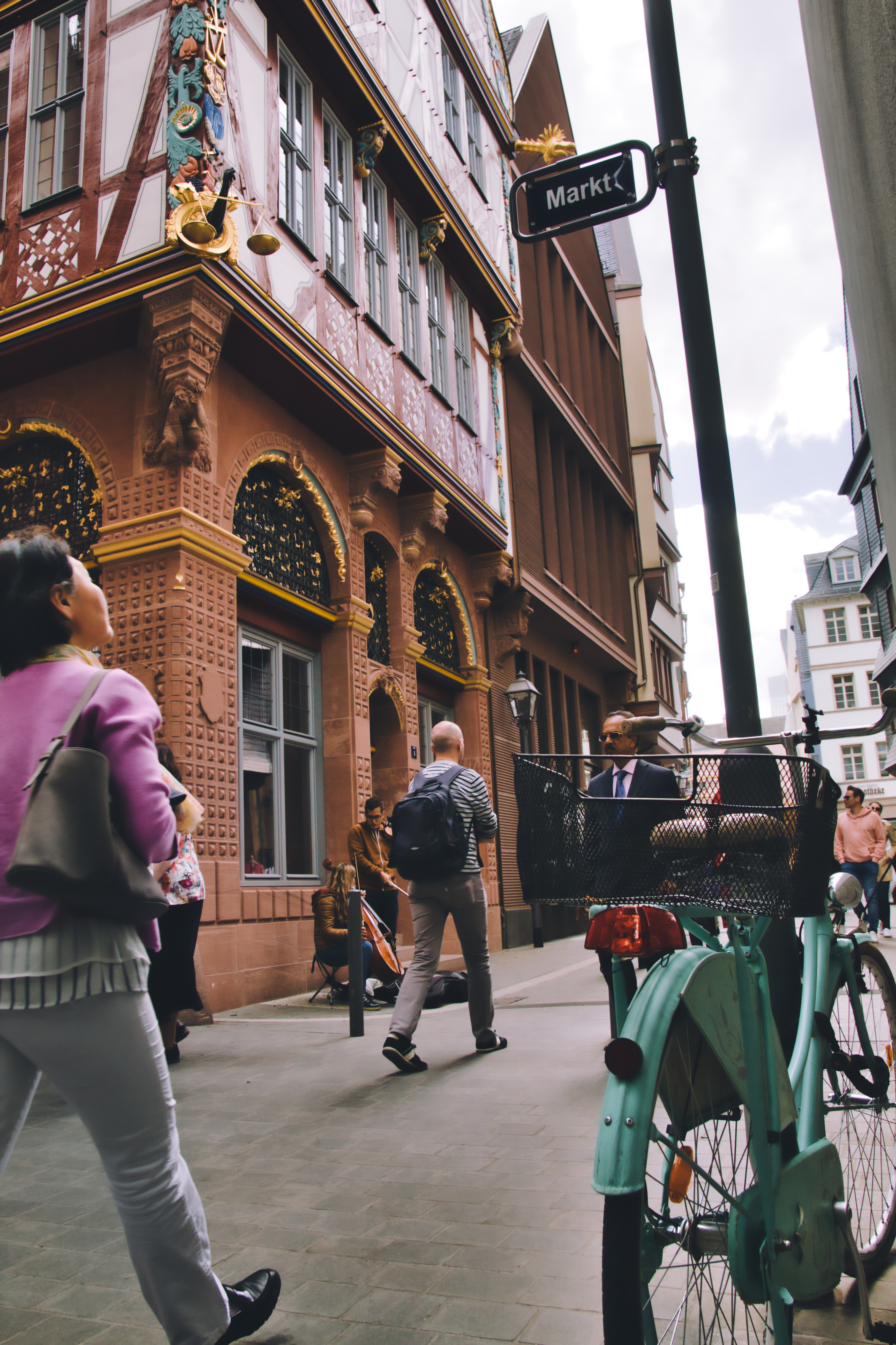
street wall collage - Photo:PxHere The cento is a poetry form that I used with students but that I haven't used myself o...